Coming Q3 2026 · iOS first

A sommelier
in your pocket.

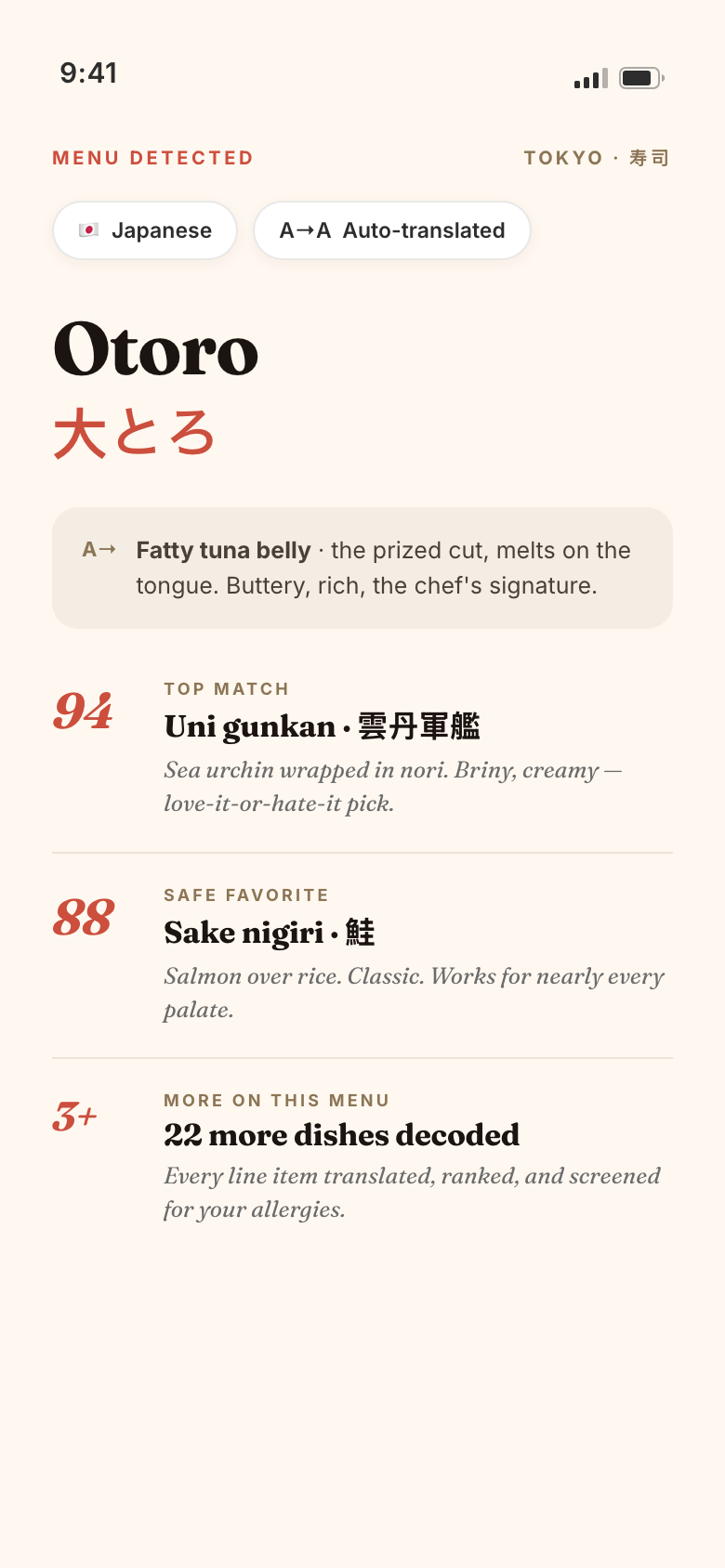
TryEat reads any menu — handwritten, foreign, chaotic — and ranks every dish for you. Allergies, beliefs, taste history. One scan, eight seconds.

For investors → see the deck
96%
Match accuracy
8s
Avg decision time
40+
Languages
scroll ↓
The problem

Every menu is a decision tax.

Travelers pay it twice — in a language they don't speak, under dietary rules nobody accounts for. Diners freeze, pick randomly, and leave unsure. A billion meals a day.

73%
Decision fatigue

Freeze at the menu.

Travelers report spending 4–9 minutes choosing a dish in a foreign restaurant — and still leaving unsure they picked right.

1.2B
Hidden constraint

Allergies & beliefs.

Global population eating under allergy, religious, or medical dietary rules. Almost no menu tells them what's safe.

8s
Decision time

From confused to ordering.

Eight seconds with TryEat — instead of nine minutes of scrolling Google Translate and guessing what "trippa" means.

The product

One scan. Every dish ranked for you.

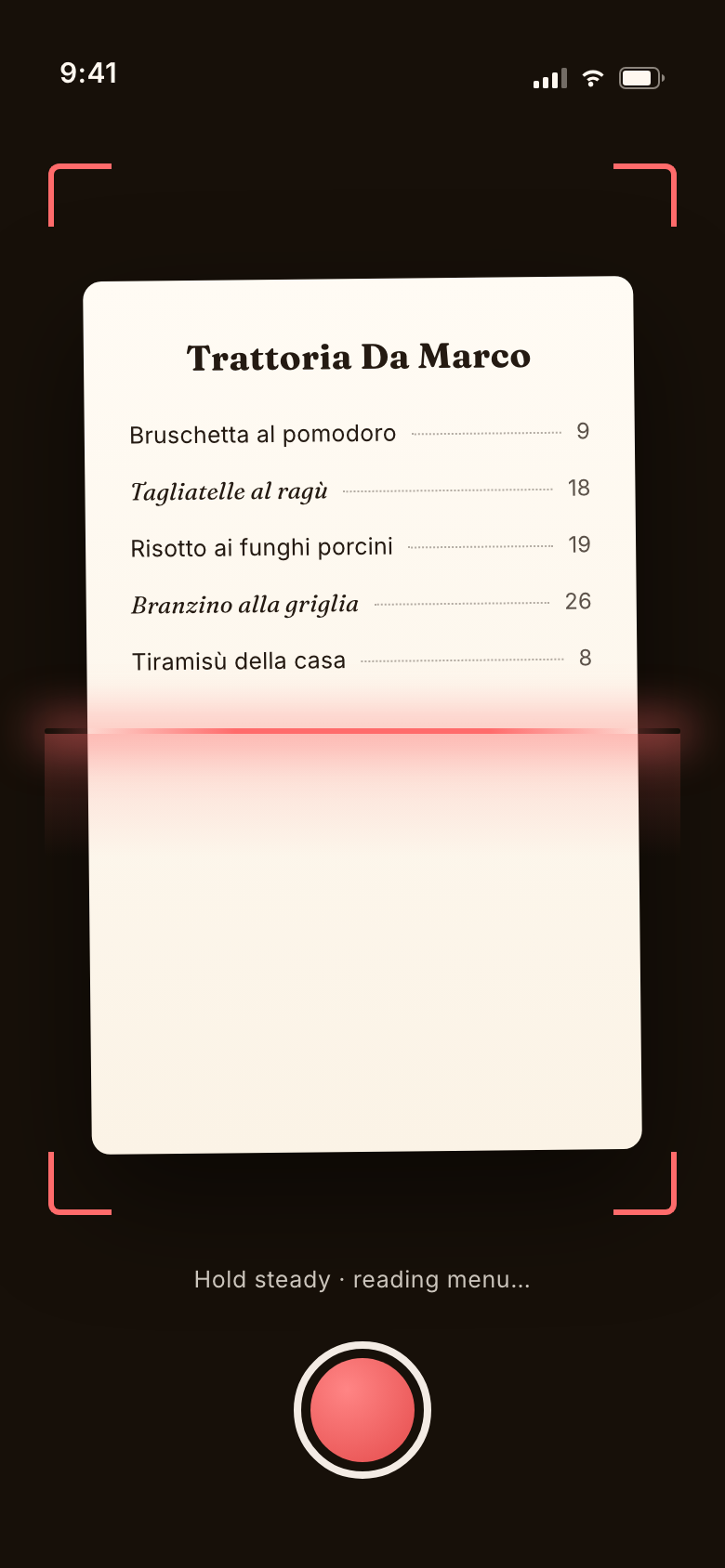
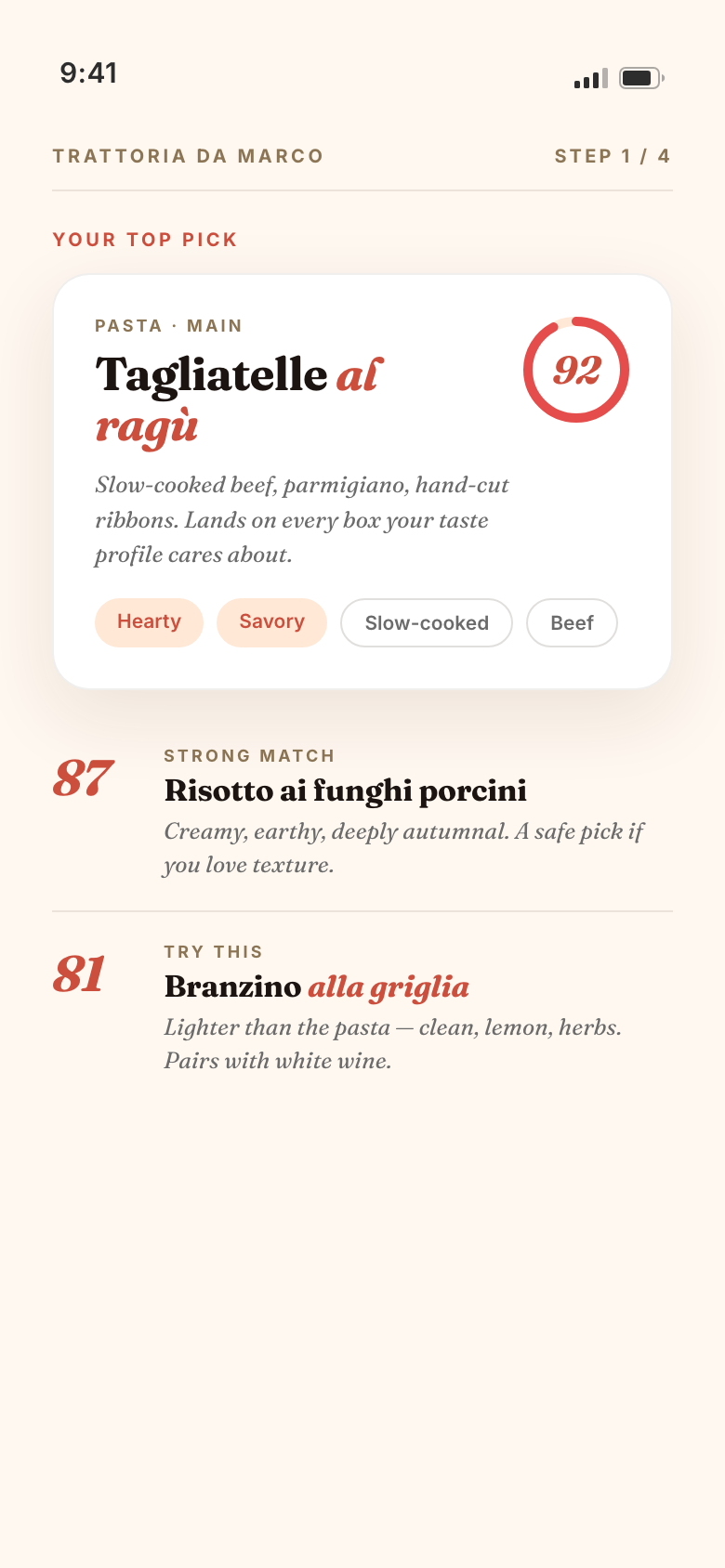
Point the camera at the menu. Eight seconds later, you have three dishes ranked 1–2–3, each with a one-line reason and full ingredient composition.

Top match
96% for you
96%
Sea bass al forno.
"Clean, briny, herbal. Light enough after last night's heavy dinner — and you've loved branzino in Milan."
With · from menu
sea bass · olive oil · Amalfi lemon · thyme · grilled asparagus · roasted potatoes
Show to waiter · €22

Eight seconds from confused to ordering.

01

Scan.

Point at the menu. Handwritten, foreign, chaotic — our vision stack handles it.

02

Match.

Three ranked picks with a one-line reason. Every ingredient either verified from menu or AI-approximated (clearly labeled).

03

Order.

Tap the winner. Dish name appears big on your screen, translated for the waiter.

Why now

This was impossible two years ago.

Menu match scoring never existed in food because the context was unknowable. In 2025 vision models finally got good enough — and we're first to move into the gap.

Pre-2023
Menus were opaque.
OCR was brittle, parsing cuisine-aware structure impossible, and running models on mobile cost more than a restaurant bill.
2024–2025
Vision models matured.
GPT-4V, Claude 3.7, Gemini 2 handle messy handwritten menus in any language, extract ingredients, classify by dietary tags.
2026+
Now shippable.
Inference cost per scan ~$0.02. Margins close. The wave only arrived in 2025 — TryEat is early enough to own the category.
Be first

The next menu you can't read — let us decode it.

We're launching iOS first in Q3 2026. Waitlist members get the app a week before public release, free Pro for the first month, and one decent-but-not-spammy email when it's ready.